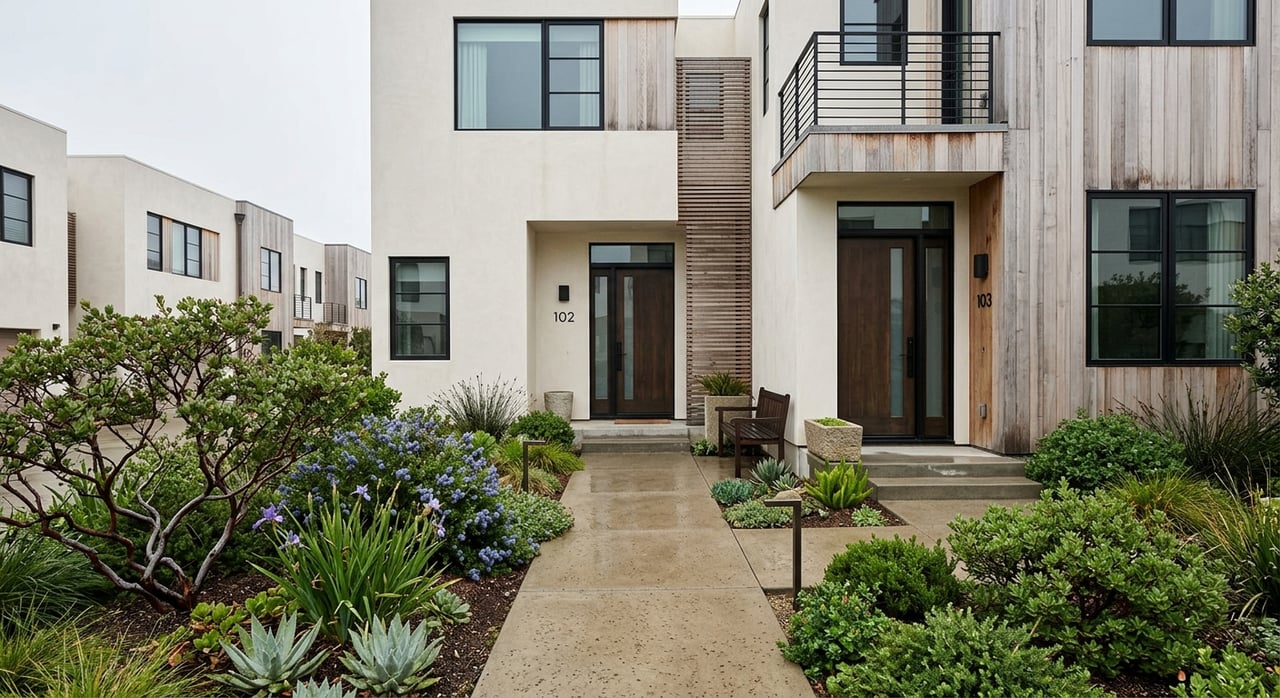
If you have been eyeing condo or townhome living in Santa Cruz, you already know one thing: this is not the bargain corner of the market. What it can offer, though, is a different kind of value, with less exterior upkeep, a smaller ownership footprint, and access to the coastal lifestyle many buyers want. If you are weighing convenience, location, and day-to-day ease against shared rules and monthly dues, this guide will help you sort through the tradeoffs with clarity. Let’s dive in.
Why attached homes stand out in Santa Cruz
In Santa Cruz, condos and townhomes are often the more attainable option compared with detached houses, but they are still expensive in absolute terms. Current city condo listing data showed 19 condos for sale with a median listing price of $818,000, while the Santa Cruz County Association of REALTORS® reported 132 condo and townhome listings in inventory, 28 sold, and a median sale price of $855,000 in May 2026.
That matters most when you compare attached homes to single-family homes. In the same county report, the median sale price for single-family homes was $1,342,500. On median price, condo and townhome options were about 36% less expensive, which can create a more realistic path to ownership, but not a low-cost one.
Inventory also increased from 82 condo and townhome listings in January 2026 to 132 in May 2026. That suggests buyers had more choice in the spring market, though supply still remained relatively limited. In practical terms, you may see more options than earlier in the year, but you still need to move with a clear plan.
What condo and townhome living really offers
For many buyers, attached-home living in Santa Cruz is a lifestyle decision as much as a financial one. You are often trading a private yard and full exterior maintenance responsibilities for a more convenient location and a simpler ownership experience. That can be especially appealing if you want to spend more time enjoying the coast and less time managing a property.
This setup often attracts first-time buyers, downsizers, second-home shoppers, and people who want to stay close to downtown or the beach without taking on the full upkeep of a detached home. The key is to look at the whole picture. A lower purchase price than a single-family home does not always mean a lower total monthly cost once HOA dues, parking, and taxes are part of the equation.
Where buyers often look in Santa Cruz
Downtown Santa Cruz
Downtown is one of the most natural places to look for condos and townhomes in Santa Cruz. It is the city’s most walkable setting for attached housing, and the city’s Downtown Plan continues to shape how this area evolves. The current Downtown Plan Expansion study is considering a scenario with up to 1,600 housing units, with an emphasis on stronger connections between downtown, the beach, and the Beach-South of Laurel area.
If you want to be close to restaurants, shops, events, and daily errands, downtown may feel like the most convenient fit. It can also work well if you want to rely less on a car. The city’s GO Santa Cruz program supports alternatives like transit, biking, carpooling, and other commute tools, and the city says Santa Cruz has the second-highest rate of bike commuting in the U.S.
Parking, however, needs close attention here. The City of Santa Cruz says there are 19 downtown parking lots, including six free lots with time limits and 13 paid lots. The city also has seven residential permit parking programs, and residents on restricted streets can purchase three annual residential permits, two annual guest permits, and up to 30 daily permits per household.
That means parking is not something to assume. Before you buy, confirm whether your unit includes assigned parking, garage parking, permit access, or guest limitations. For downtown buyers, this can affect daily convenience more than expected.
Westside Santa Cruz
Westside Santa Cruz is a distinct micro-market, not just an extension of downtown. The city’s historic evaluation defines Westside as the area west of the San Lorenzo River, excluding downtown. That distinction matters because buyers often shop these areas for different reasons, even when both offer attached-home options.
If downtown feels more urban and walk-focused, Westside can feel more varied in layout and housing style. Depending on the complex, you may find townhome-style properties tucked into quieter pockets or near established residential areas. The important thing is to evaluate each project on its own terms rather than assuming all Westside attached housing offers the same ownership structure or amenities.
Smaller complexes and hidden pockets
Some of Santa Cruz’s most appealing condo and townhome options are outside the most obvious search zones. Smaller complexes and less visible pockets can offer a different rhythm, sometimes with a more private feel or a lower-profile setting. These properties may not look dramatically different from one another from the street, but their legal setup and operating rules can vary a lot.
That is why appearance alone is not enough. A property that looks like a townhome may be a condominium or part of a planned development, and that difference can affect maintenance responsibility, insurance questions, and how the HOA operates. In Santa Cruz, details matter.
Condo vs. townhome in California
One of the biggest points of confusion for buyers is the word “townhome.” In California, that term describes the architecture, not necessarily the legal form of ownership. A townhome-style property can fall under different common-interest development structures, so you should not assume the maintenance rules just by looking at the building.
The California Department of Real Estate explains that condos and many townhome-style properties are common-interest developments. When you buy, you automatically become a member of the owners’ association. The governing documents, usually including CC&Rs, bylaws, and articles of incorporation, define rights, responsibilities, and how shared areas are managed.
That shared ownership model is what makes attached homes attractive to many buyers. You usually have less exterior maintenance to handle on your own. At the same time, you have less individual control over common areas, project rules, and decisions made by the board.
What to review before you buy
HOA responsibilities and rules
A well-run HOA can make ownership easier. It can also shape your day-to-day experience in ways buyers sometimes underestimate. Before you move forward, review what the association maintains, what owners are responsible for, and what rules apply to parking, guests, pets, rentals, and use of common areas.
The Department of Real Estate specifically advises buyers to read the public report carefully and look beyond the appearance of the unit itself. That is excellent advice in Santa Cruz, where one project may be straightforward and another may have more layered rules or obligations. A calm, thorough review upfront can prevent surprises later.
Dues, reserves, and special assessments
Monthly HOA dues should be treated as part of your housing payment, not as a side note. Those dues help pay for the operation and maintenance of shared components, and owners’ associations can enforce delinquent assessments through collection remedies, including liens. In other words, HOA obligations are real and should be budgeted with care.
California law also requires reserve planning for common-interest developments. At least once every three years, the board must cause a visual inspection of major components for reserve-study purposes, and the reserve funding plan must include any changes in regular or special assessments needed to fund the plan.
For you as a buyer, the practical questions are simple:
- What are the current monthly dues?
- Are reserves healthy?
- Are any special assessments planned?
- Has the association been increasing dues regularly?
These answers help you understand whether a lower-maintenance lifestyle also comes with stable, predictable ownership costs.
Property taxes and timing
Property taxes in Santa Cruz County deserve a close look when you build your ownership budget. The county says annual tax bills are mailed in October and paid in two installments due November 1 and February 1. The delinquent dates are December 10 and April 10.
The county also notes that supplemental tax bills usually arrive 6 to 12 months after purchase. Even if the bill has not arrived yet or is still in the previous owner’s name, the owner remains responsible. For buyers, that means planning ahead for a tax bill that may not show up right away.
Parking and guest access
Parking is one of the most important due-diligence items for Santa Cruz attached homes, especially downtown and in permit-controlled areas. You want to know whether parking is deeded, assigned, first-come-first-served, permit-based, or restricted for guests. What sounds manageable during a showing can feel very different on a busy weekend or when visitors come to town.
This is especially true if you are considering a home for part-time use or expect regular guests. A beautiful unit in a great location can feel less convenient if guest parking is limited or if nearby street restrictions are more complex than expected. Asking early is always better than discovering the answer after closing.
Who condo and townhome living fits best
Attached-home living in Santa Cruz can be a smart fit if you want a home base that supports your lifestyle without the full demands of detached-home upkeep. You may value coastal access, convenience, and a simpler maintenance picture more than extra land or private outdoor space. In that case, a condo or townhome can align very well with how you actually want to live.
It can also be a strong option if you are entering the Santa Cruz market for the first time, downsizing from a larger home, or looking for a second home with a smaller management footprint. The right fit usually comes down to your comfort with shared governance, monthly dues, and the specific rules of the community you choose.
Final thoughts on Santa Cruz attached homes
Condo and townhome living in Santa Cruz is best understood as a location-and-lifestyle play. You are often choosing proximity, convenience, and lower day-to-day maintenance in exchange for shared rules, HOA costs, and a smaller ownership footprint. That can be a very worthwhile trade, but it works best when you go in with clear expectations and careful due diligence.
If you want thoughtful guidance as you compare Santa Cruz condo and townhome options, Caroll Basile brings a calm, detail-driven approach rooted in deep local knowledge and strategic buyer advocacy.
FAQs
What is the typical price range for condos and townhomes in Santa Cruz?
- In May 2026, the Santa Cruz County Association of REALTORS® reported a median sale price of $855,000 for condo and townhome properties, while current Santa Cruz city condo listings showed a median listing price of $818,000.
How do Santa Cruz condos compare with single-family homes on price?
- In the same May 2026 county report, single-family homes had a median sale price of $1,342,500, making condo and townhome properties about 36% less expensive on median price.
What does an HOA usually mean for a Santa Cruz condo buyer?
- In California common-interest developments, you become a member of the owners’ association, pay assessments for shared operations and maintenance, and follow the project’s governing documents such as CC&Rs and bylaws.
What should buyers check about parking for Santa Cruz condos and townhomes?
- Buyers should confirm whether parking is assigned, deeded, permit-based, limited for guests, or subject to nearby street restrictions, especially in downtown and permit-controlled areas.
What should buyers know about Santa Cruz County property taxes after closing?
- Santa Cruz County says annual tax bills are mailed in October, installments are due November 1 and February 1, and supplemental bills usually arrive 6 to 12 months after purchase.