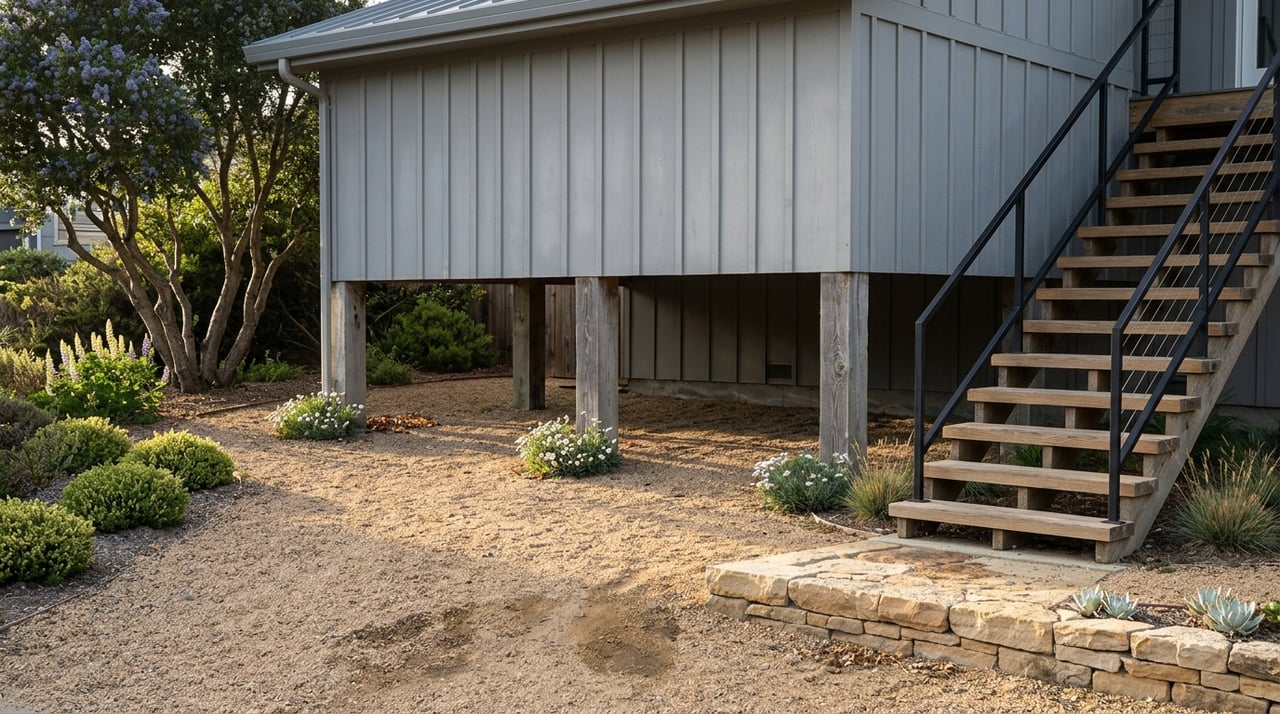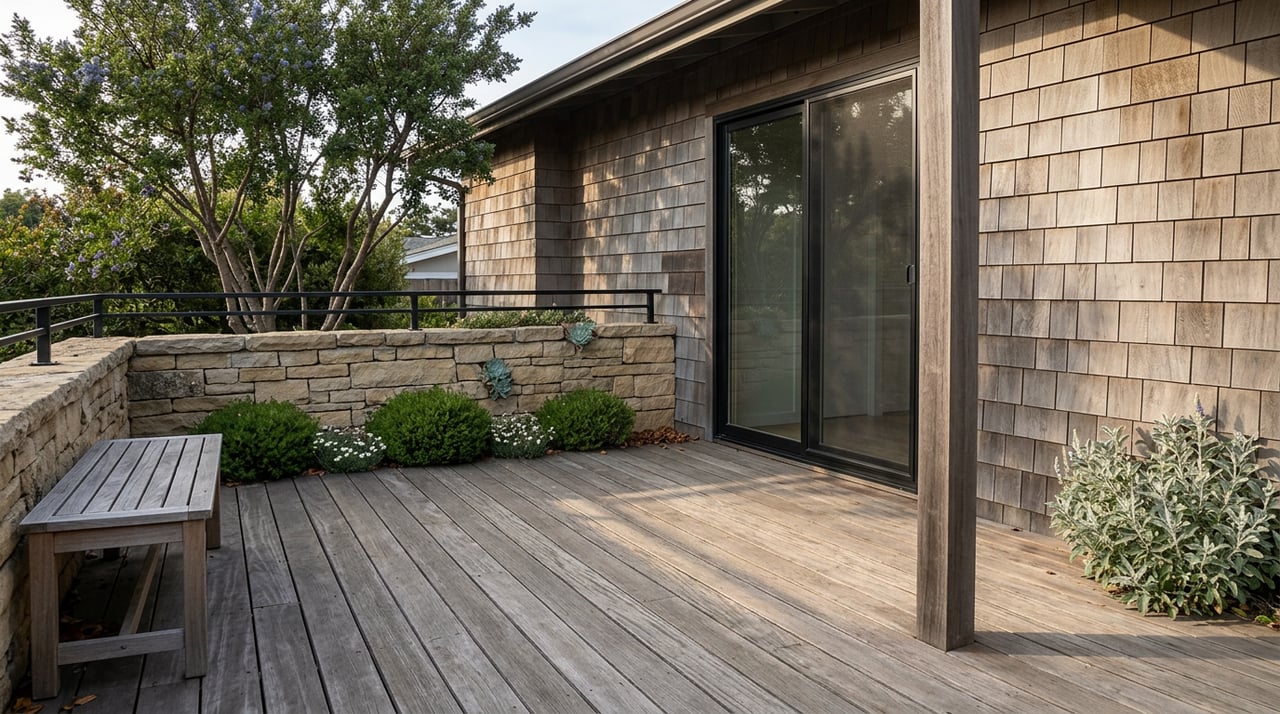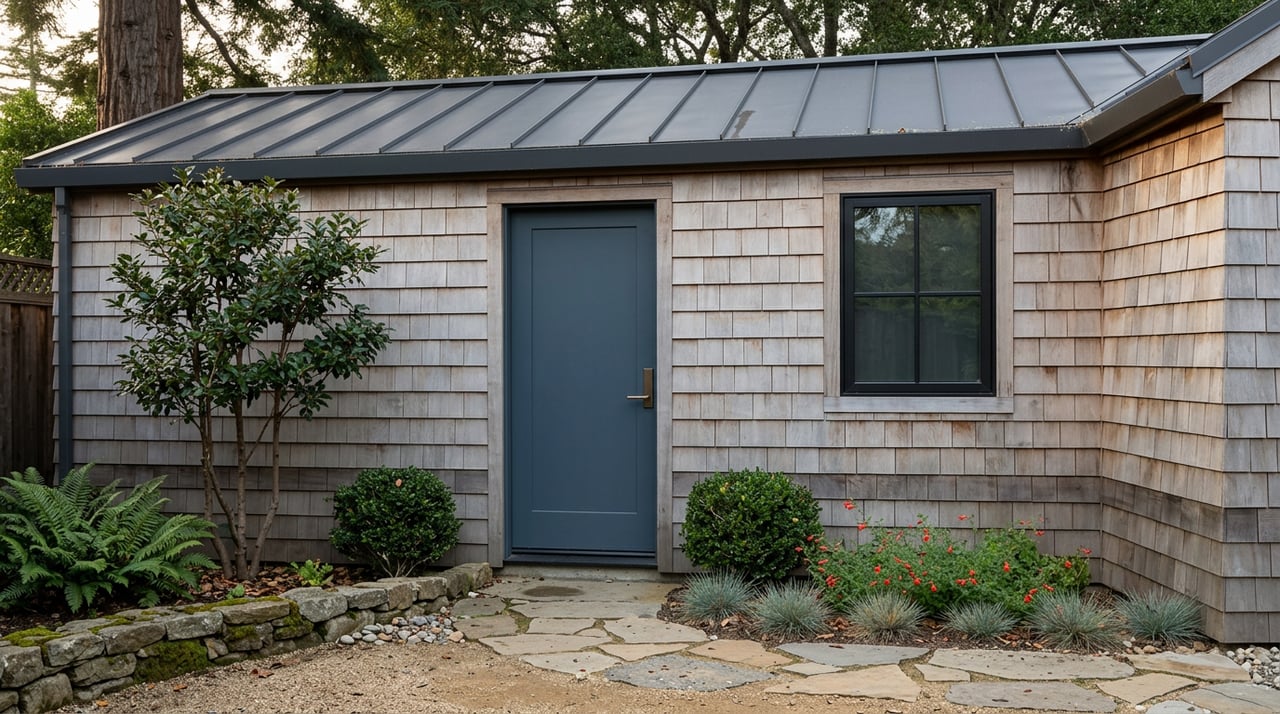
Two bluff-top listings go up within a few blocks of each other on West Cliff Drive. Same price band. Same ocean frontage. Same postcard version of Santa Cruz living. One owner can add a primary suite toward the water side of the lot next year. The other cannot touch a deck without a geotechnical review that may say no. Nothing on either listing sheet tells you which house is which.
That gap is the actual thing a buyer needs to understand before writing an offer on a bluff-top or oceanfront property here, whether it's West Cliff Drive itself, Pleasure Point, or Opal Cliffs. The erosion story gets the headlines. The real friction sits one layer down, in a document most buyers never see until escrow is already open.
Setback isn't a number. It's a study.
Ask a buyer anywhere else in Santa Cruz County how far their future addition needs to sit from the property line, and the zoning code gives a straight answer. Ask that question on a bluff lot and the honest answer is: it depends on a report that hasn't been written yet, or one that was written for the previous owner and may not hold up for you.
Santa Cruz County does not set one standard bluff setback distance. Instead, a licensed surveyor and a geotechnical professional identify the legal bluff edge on that specific parcel, usually at the point where the slope breaks at the top of the cliff. From there, a geotechnical report evaluates soils, historical retreat, groundwater, and wave exposure, then estimates how far the bluff is likely to retreat over a required design life, often 50 to 100 years, with a built-in factor of safety. The county relies on that mapped edge and that report to decide what can be built and where.
The consequence is unglamorous but important: two neighboring bluff lots can carry two different buildable envelopes, even with identical lot sizes and nearly identical prices. One parcel's geology and history give it more room to build. The other doesn't. A buyer comparing price per square foot across a handful of West Cliff listings is comparing the wrong variable. The report attached to the parcel, not the number on the listing sheet, is what actually governs the home's future.
The permit follows the property, not the market
Most work near a bluff edge in the Santa Cruz coastal zone triggers a Coastal Development Permit, reviewed against the county's Local Coastal Program and, on appeal, the California Coastal Commission. A modest inland addition or a deck placed well back from the edge is often workable with geotechnical sign-off. A pool near the bluff face usually isn't. Retaining walls and major hardscape near the edge get heavy scrutiny because they change drainage and groundwater in ways that can destabilize the slope they're meant to protect.
The county's own zoning code draws a hard line around shoreline armoring specifically. Routine repair of a seawall, bluff retaining wall, breakwater, or similar structure is one thing. But repair involving substantial alteration of the structure's foundation, or the placement of rip-rap or other solid materials on a beach or shoreline protective work, requires a full Coastal Development Permit rather than a simpler maintenance sign-off. That distinction matters to a buyer because it means a seller's past emergency stabilization work, done under time pressure after a storm, may or may not have gone through that fuller review. If it didn't, the fix inherited with the house may itself be a permitting problem waiting for its own hearing.
This is also why any prior armoring, revetment work, or emergency stabilization on a bluff-edge parcel becomes a disclosure item, not a footnote. If a seller near Pleasure Point or Opal Cliffs has records of erosion repairs or shoreline protection work, those permits and reports need to travel with the file. The California Coastal Commission has published materials tracking where shoreline armoring has concentrated along the Santa Cruz County coast, and future approvals in those same stretches get evaluated with that history in view.
A shoreline that keeps making the point for itself
The debate here isn't abstract. Natural Bridges State Beach was named for three mudstone arches visible from the end of West Cliff Drive. Only one remains today. Gary Griggs, a distinguished professor of Earth and Planetary Sciences at UC Santa Cruz who has taught there for more than 50 years, has spent years documenting exactly this kind of change along the same stretch of coastline a bluff-top buyer is now considering.
"Sea levels are rising, and there seems to be good evidence that waves are getting larger over time."
That's the backdrop the county's geotechnical requirement is built for. A 50 to 100 year design life isn't a bureaucratic flourish. It's the county trying to answer, parcel by parcel, whether a given piece of ground will hold up long enough to justify what someone wants to build on it.
What this means once you're actually financing the deal
A geotechnical report and permit history on a bluff-edge property don't just shape your future renovation plans. They shape what a lender and an insurer are willing to sign off on today. Financing a bluff-top purchase typically means a lender wants evidence of long-term stability, not just a favorable appraisal. Insurance quotes are worth getting early rather than late, since some carriers price bluff-edge exposure differently than a standard inland policy, and a thin or outdated geotechnical file can complicate both conversations at once.
Practically, that means the diligence sequence on a West Cliff, Pleasure Point, or Opal Cliffs purchase looks different from a typical Santa Cruz transaction:
| Standard inland purchase | Bluff-edge purchase |
|---|---|
| Zoning setback is a fixed number | Setback is derived from a site-specific geotechnical report |
| Disclosure covers structure and known defects | Disclosure also covers prior armoring, revetment, or emergency stabilization permits |
| Insurance quote is largely a formality | Insurance quote depends on the geotechnical file's age and findings |
| Future addition plans are a zoning lookup | Future addition plans require confirming the design life and remaining buildable envelope |
None of this means a bluff-top home is a bad purchase. It means the report is doing as much work as the appraisal, and it deserves the same early attention.
A due-diligence sequence worth following
For a buyer who has already decided this stretch of coastline is where they want to be, here's the order that protects you:
- Ask for the existing geotechnical report before you write an offer, not after. If one doesn't exist or is old, budget time and cost for a current one.
- Request any permits tied to prior erosion repair, seawall or revetment work, or emergency stabilization, and confirm whether each went through a full Coastal Development Permit or a lighter maintenance process.
- Get insurance quotes early in your contingency period rather than waiting until close to closing.
- If you have specific plans for an addition, deck, or pool, ask a geotechnical professional to weigh in on feasibility before you fall in love with the floor plan.
- Build in a contingency for geotechnical feasibility and acceptable lender and insurer terms, the same way you would for a standard inspection contingency.
A short FAQ
Does every bluff-top home need a brand-new geotechnical report before I can buy it? Not necessarily. An existing report may still be valid, but its age and findings should be checked against your specific plans and against current lender and insurer requirements.
If the seller already has an approved Coastal Development Permit, does that transfer to me? The permit and its conditions run with the property, but any planned changes beyond what was approved will need their own review.
Can I get an insurance quote before permits are finalized? Yes, and it's worth doing early. A preliminary quote tells you whether the property's geotechnical history is likely to be a smooth conversation with carriers or a slower one.
A bluff-top home on this coastline is still, in most cases, a very good decision. It's just a decision that rewards reading the report before you fall for the view.
If you're weighing a purchase along West Cliff Drive, Pleasure Point, or Opal Cliffs and want a clear-eyed read on what a specific parcel's history actually means for your plans, Caroll Basile offers a free home valuation as a starting point for that conversation.